How Nutritionists Use AI in Practice (Without Replacing Clinical Judgment)
AI is showing up everywhere in nutrition—and most coaches are asking the same question: Is this actually useful, or just hype?
The honest answer: AI works best as workflow support, not as a substitute for clinical judgment. The nutritionists getting real value from it aren’t handing plans to a chatbot. They’re using AI to see patterns faster, review meals at scale, and free up time for the conversations that change behavior.

Here’s how that looks in everyday practice 👇
Where AI fits in real nutrition coaching
Most of a dietitian’s week isn’t spent writing meal plans—it’s spent reconstructing what clients actually ate.
Photos in chat threads. Voice notes. Vague descriptions like “normal lunch.” By the time you spot a pattern, you’ve burned an hour scrolling.
AI helps at the review layer: turning meal logs into structured summaries so you can ask better questions instead of playing detective. That only works when logging is organized in the first place—the same nutrition client management rhythm covered in how nutritionists manage 100+ clients.
Three tasks where AI earns its keep:
- Pattern spotting — flagging low protein, late-night snacking, or missing vegetables across a week
- Faster review — ingredient-level breakdowns from meal photos instead of manual estimation
- Less admin — structured timelines instead of rebuilding context from WhatsApp scrollback
👉 AI accelerates review. You still decide what to change.
Client management at scale — InGreedX Studio
When your roster grows past 10–15 clients, the bottleneck isn’t knowledge—it’s visibility. That’s where coach-side AI tools matter most.
InGreedX Studio is built for nutrition client management: clients log real meals, AI surfaces ingredient-level diet-quality insights, and you review everything from a coach dashboard—not a chat archive.
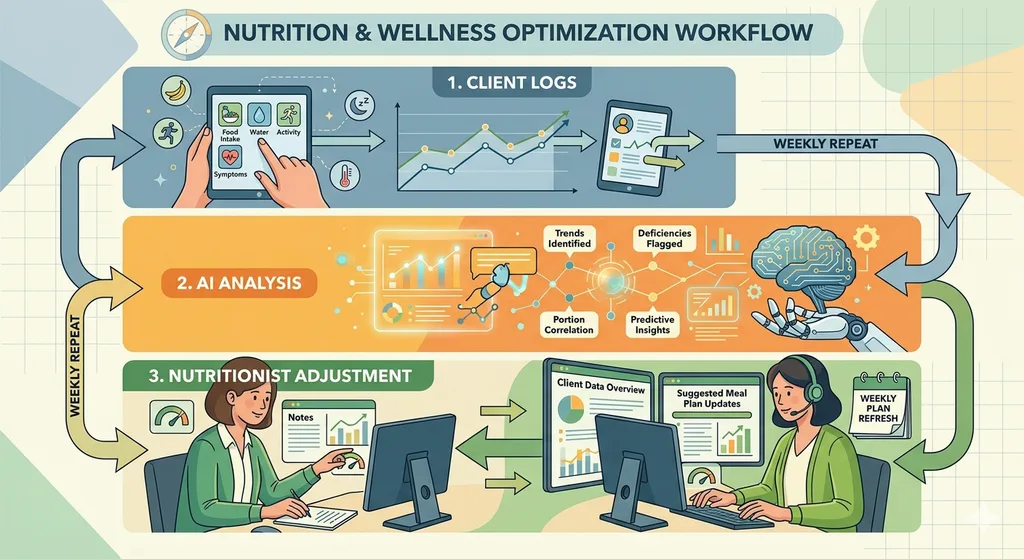
What changes in practice:
- Structured meal capture — logs roll into client timelines automatically
- Ingredient-level analysis — see diet quality beyond calories
- Scalable check-ins — review a roster in minutes, not hours
If WhatsApp is your current system, you already know where it breaks. Read why WhatsApp alone fails for nutrition client management for the full picture—then add a layer that keeps chat for rapport while moving meal history somewhere searchable.
Flexible plans pair well with this setup. Teach food exchange rules once, then use AI-assisted reviews to spot when clients drift outside their exchange targets.
Packaged-food quality for clients — InGreedX
Meal logging is half the story. Clients also buy packaged foods—snacks, sauces, breakfast cereals—and most labels are designed to confuse, not inform.
That’s a separate job: help clients judge food quality before it hits the plate.
InGreedX handles the consumer side: plain-English ingredient breakdowns, health signals, and smarter swap suggestions for packaged products. Coaches often assign it as homework—“scan three items from your pantry this week”—while InGreedX Studio tracks whether those choices show up in logged meals.
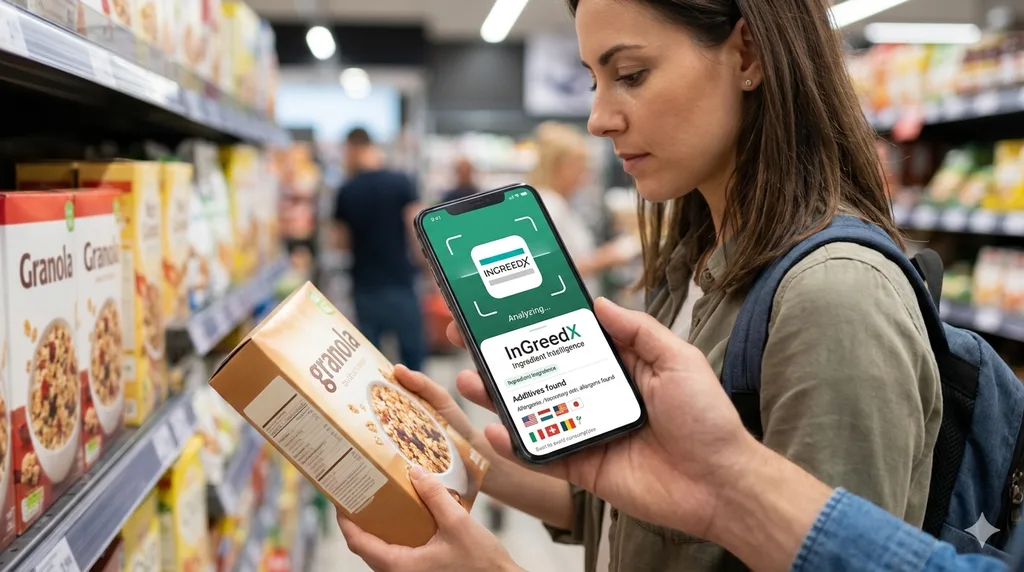
The split is deliberate:
| Tool | Who uses it | What it solves |
|---|---|---|
| InGreedX Studio | Coach | Client management, meal timelines, AI meal analysis |
| InGreedX | Client | Packaged-food quality, label literacy, smarter swaps |
Together, clients learn what to buy and you see what they actually eat.
A simple weekly rhythm
You don’t need a complex AI stack. Most coaches follow a loop like this:
- Onboard — goals, preferences, conditions (PMOS/PCOS clients especially need long-term tracking—see the PMOS rename guide)
- Log — clients capture meals through Studio (WhatsApp-friendly, structured on your end)
- Review — AI highlights patterns; you spot outliers and context AI misses
- Adjust — one plan change, one habit focus, one message—not a lecture
👉 The win isn’t automation. It’s consistency without burnout.
Guardrails that matter
AI in nutrition coaching works when you treat it like a smart assistant, not an authority:
- Verify outliers — unusual portion estimates or missing ingredients still need a human check
- Protect privacy — use platforms built for health data, not generic chat tools
- Stay accountable — your license, your name, your clinical call on every recommendation
📊 Structured coaching programs still outperform self-help by a wide margin (Wing et al., 2003). AI makes structured programs easier to run, not optional.
Ready to try it?
If you’re spending more time chasing meal updates than improving plans, AI won’t fix a broken workflow—but it will amplify a good one.
- Coaches: explore InGreedX Studio for client management and AI meal analysis
- Clients: point them to InGreedX for packaged-food intelligence
Start with the rhythm. Let AI handle the repetitive review. Keep the clinical judgment where it belongs—with you.
Further reading: How nutritionists manage clients · Why WhatsApp fails at scale · Food exchange rules · Bebop Flo blog