How to Automate Follow-Ups for Nutritionists (Without Losing the Human Touch)
Most nutrition practices don’t stall because of weak meal plans.
They stall because follow-ups don’t keep up.
From our work with dietitians and coaching teams, the pattern is consistent: plans look solid on day one, then daily logs pile up, check-ins slip, and clients quietly drift. Automating follow-ups isn’t about removing the coach—it’s about protecting the coaching relationship when volume rises.
Here’s what we’ve seen in practice 👇
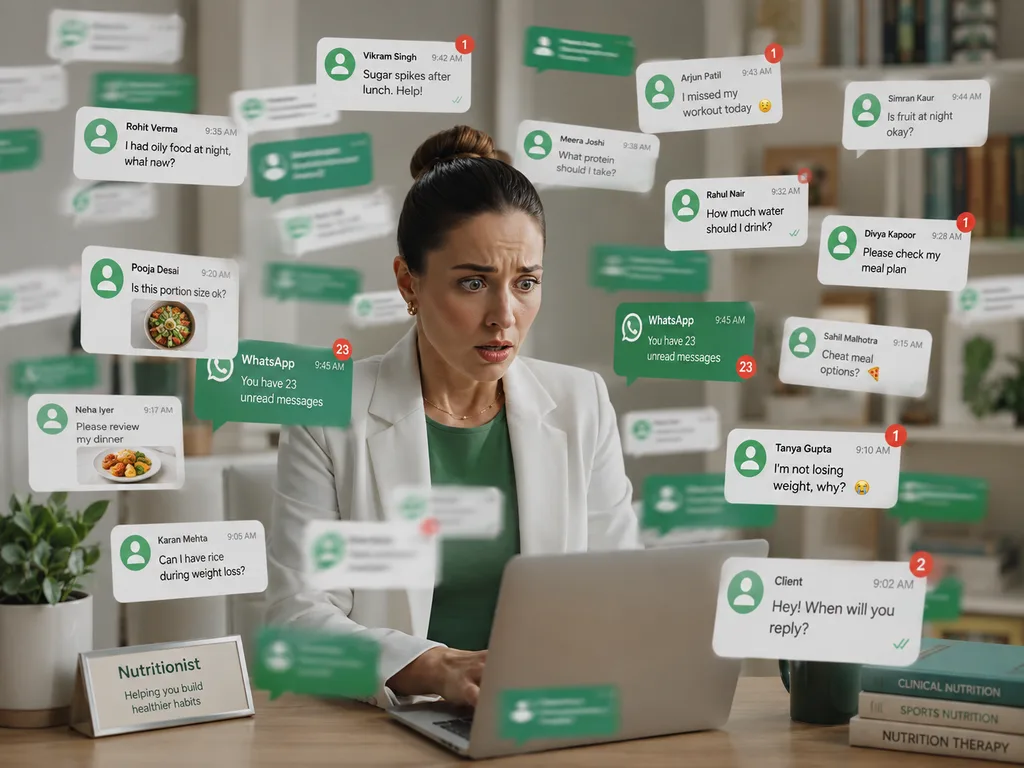
What follow-up volume actually looks like
On average, a nutritionist receives about 4–5 meal logs or follow-ups in a typical stretch of client activity—photos, “had lunch,” voice notes, weight updates, and quick questions.
That doesn’t sound like much… until you multiply it across a full roster.
A few clients feel manageable. Dozens of clients turn into a permanent scroll through chat threads. You’re not coaching—you’re triage.
If you’ve already felt that squeeze, why WhatsApp alone fails for nutrition client management will sound familiar.
The 50-client ceiling
We’ve repeatedly heard the same inflection point: nutritionists beyond ~50 clients struggle to retain people and keep continuous assessments going.
Not because they care less.
Because every client still needs:
- Meal visibility
- Habit check-ins
- Plan adjustments
- Motivation when life gets messy
Without a system, continuous assessment becomes optional—and optional is where retention dies.
Top practices don’t “try harder.” They change the nutrition client management rhythm. See how nutritionists manage 100+ clients for the full loop.
India-context friction: plans vs. household reality
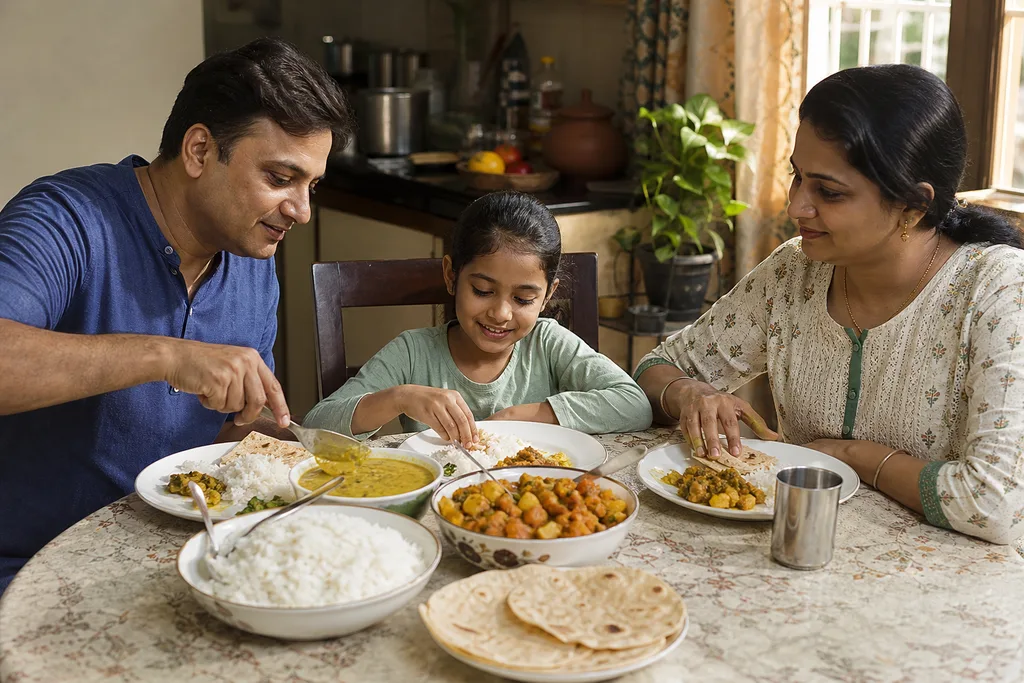
One nutritionist we spoke with in India put it plainly: many clients struggle to follow a diet plan because of lack of time and resources to cook—and because many families eat what is cooked for everyone.
That means a perfect PDF plan can still fail if it ignores:
- Shared household meals
- Limited solo cooking windows
- Festival, travel, and work-day chaos
Automation that only nags “log breakfast” misses the real blocker. Careful follow-up has to ask how people eat in their home—not only whether they logged.
“I’m following the plan”—but results stall
Another coach complained about a classic trap: clients claim they’re adhering, yet the scale (or labs, or energy) doesn’t move.
Often the culprit isn’t defiance—it’s unaccounted calories missed in logging:
- Tea with sugar that never makes the photo
- “Just a bite” from someone else’s plate
- Packaged snacks between structured meals
- Weekend portions that never get described clearly
If your follow-up system only collects incomplete logs, you’ll coach against fiction. Honest logging—and habit-aware questions around the gaps—matters more than more reminders.
Logging only fixes the missing half. When the calories are in the log and results still stall, the next review is food quality—oils, packaged snacks, sugary chai, sodium—not another macro column. That’s calories tell half the story.
Automation only works with careful follow-up
This is the non-negotiable lesson from our experience:
Automation requires careful follow-up with clients around their eating habits.
Blind daily pings create noise. Useful automation:
- Captures meals in a structured way
- Surfaces missing days and vague logs
- Triggers a short habit check-in when patterns look off
- Leaves room for human judgment on plan changes
AI and workflows can accelerate review—see how nutritionists use AI in practice—but they don’t replace listening for household constraints and hidden calories.
What to automate (practical stack)
You don’t need a 12-tool empire. Two layers cover most of the gap:
1. WhatsApp automation for food logging (InGreedX)
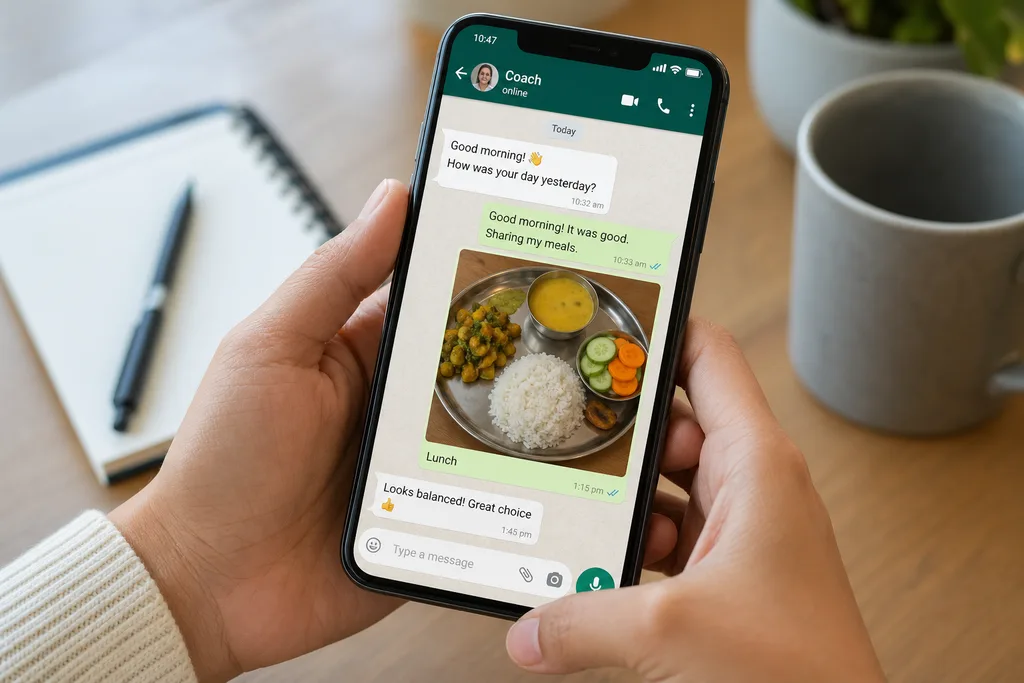
Clients are already on WhatsApp. Use that channel for meal logging—photos, text, or voice—then turn those messages into structured logs instead of buried chat history.
That’s the core idea behind InGreedX / InGreedX Studio: WhatsApp-based food logging that lands on a coach dashboard, so you review adherence without drowning in screenshots.
2. Google Forms to collect client context
Pair logging with Google Forms (or a similar form) for:
- Onboarding (goals, preferences, cooking access)
- Weekly check-ins (energy, hunger, blockers)
- Lifestyle constraints (family meals, travel, time to cook)
Forms give you comparable answers. WhatsApp logging gives you real plates. Together they support continuous assessment without inventing a new app for every question.
A simple automated follow-up loop
Use this rhythm:
- Log — Client sends meals via WhatsApp (structured into InGreedX Studio)
- Review gaps — Spot missing days and suspiciously light logs
- Habit check-in — Short form or prompt: shared meals? snacks? cooking time?
- Tweak the plan — Adjust portions, swaps, or household-friendly options
- Repeat weekly — Retention comes from consistency, not one heroic call
👉 The goal isn’t more messages. It’s clearer signal with less chaos.
Want follow-ups that scale without losing the human touch?
If you’re hitting the 50-client wall—or already buried in 4–5 logs per stretch with no time to interpret them—it’s a system problem, not a motivation problem.
InGreedX Studio helps nutritionists:
- Capture WhatsApp meal logs in one place
- Review adherence without chat archaeology
- Keep follow-ups tied to real eating habits
Start with structured logging + light forms. Keep the coaching human. Automate the busywork.
Further reading: More on nutrition client management at the Bebop Flo blog