Calories Tell Half the Story: How to Coach Food Quality
The log says the client hit the calorie target.
The scale, the energy, and the labs disagree.
That gap is where a lot of coaching stalls. Calorie tracking not working usually gets blamed on willpower or a broken spreadsheet. Often the numbers are fine and the food quality is not. Same calories can still mean a very different week of oils, packaged snacks, sugary chai, and sodium.
A calorie log is a measurement. It is not a coaching system.
Here’s how to review the other half 👇
“I’m following the plan” was only the first half
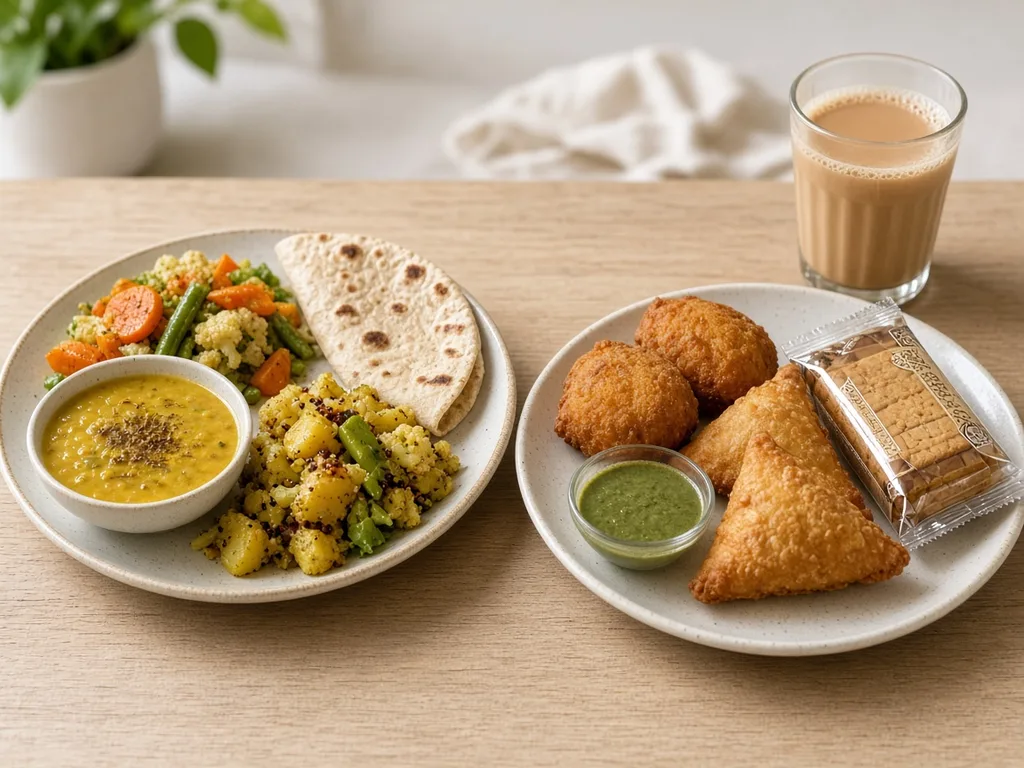
In how to automate follow-ups, the stall often starts with calories that never make the log: sweetened tea, shared bites, snacks, vague weekends.
Fix the logging and a second problem shows up.
The client really is near the target—and still not moving. Compliance was real. Quality was the missing half.
Food quality vs calories is not a debate about whether energy balance matters. It matters. The coaching mistake is treating a matched calorie number as proof the week was metabolically similar.
Same calories, different load
Four patterns show up constantly once you look past the macro total.
Cooking oils
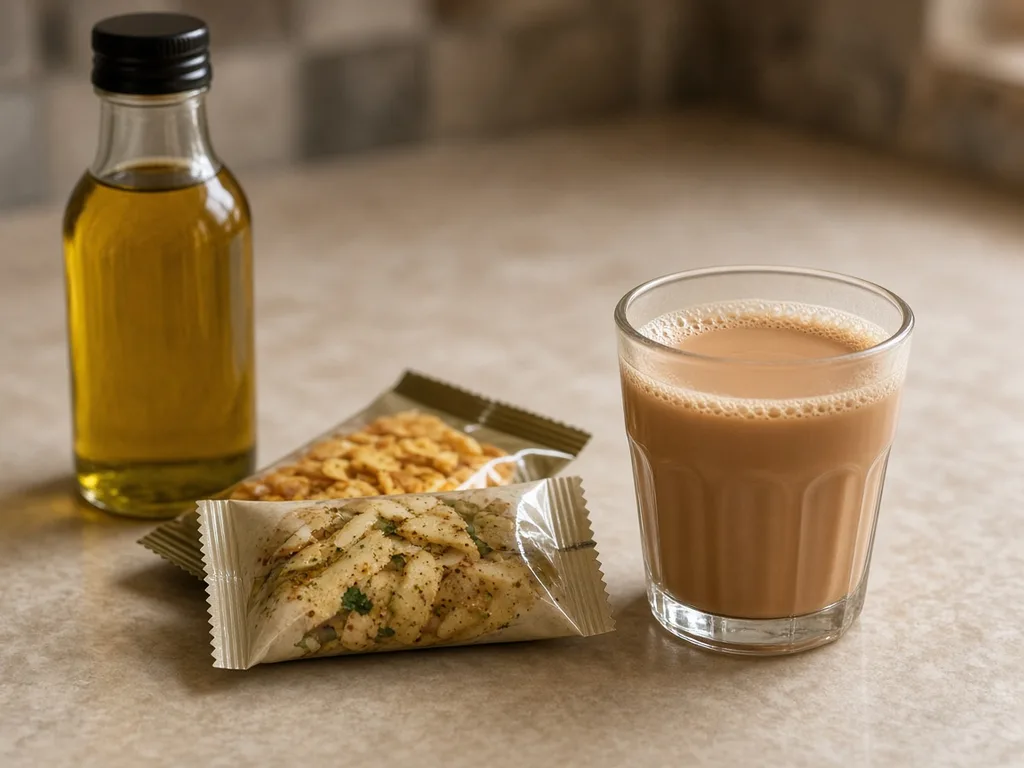
A tablespoon of oil is easy to pour and easy to miss. Two extra spoons in tadka, a fried snack “within calories,” or restaurant food cooked in reused oil can keep the log on target while the plate is mostly added fat. The calorie line looks obedient. The meal is not the one you planned.
Packaged snacks
Ultra-processed foods are formulated to be eaten quickly. In a tightly controlled inpatient trial, adults ate about 508 kcal/day more on an ultra-processed menu than on an unprocessed one—even though the meals offered were matched for presented calories, macros, sugar, sodium, and fiber. They gained about 0.9 kg in two weeks on the ultra-processed diet and lost about 0.9 kg on the unprocessed diet (Hall et al., 2019).
That trial was ad libitum. It does not prove that identical calories from ultra-processed food change metabolism by a fixed amount. It does show why ultra-processed food coaching belongs in the weekly review: when quality drops, intake rises, and the extra calories are exactly the ones clients under-log.
Sugary chai
Liquid sugar rarely looks like a “meal” in a calorie app. A few cups of sweet chai can be a quiet glucose load on top of an otherwise careful plate. Sugar-sweetened drinks are associated with higher type 2 diabetes risk, and that association is not fully explained by body weight alone (Imamura et al., 2015). If chai is in the log, don’t stop at the kilocalories. Ask how sweet it was, and how often.
Sodium
Sodium does not cancel a calorie deficit. It does move the scale. A salty restaurant week can hold fluid and look like a fat-loss stall. WHO guidance for adults is less than 2 g of sodium per day (about 5 g of salt) (WHO, 2012). When the only number you review is weight, you will “fix” a plan that was already working.
A diet quality score beats another macro column
Diet quality indices exist because single nutrients don’t describe how people eat.
In the NIH-AARP cohort (n = 492,823), higher scores on four pattern indices—HEI-2010, AHEI-2010, an alternate Mediterranean score, and DASH—were associated with a 12–28% lower risk of all-cause, cardiovascular, and cancer mortality. HEI-style scores are built per 1,000 kcal, so they describe quality at a given energy intake, not “eat less” (Reedy et al., 2014).
You don’t need to hand clients a research index. You need a weekly diet quality score you can actually review:
| Signal | What “on plan” can still hide |
|---|---|
| Added oils and fried foods | Calorie target met with low food volume |
| Packaged snacks | Ultra-processed calories between “real” meals |
| Sugary drinks, including chai | Liquid sugar that never feels like overeating |
| Sodium | Scale noise and blood-pressure load |
| Vegetables, pulses, protein | The foods the calorie total doesn’t reward |
NOVA is a practical language for the snack row: group 4 is the industrial formulations—soft drinks, packaged sweets, reconstituted meats, many ready meals—not plain cooked food (Monteiro et al., 2019). Coach the pattern. Don’t prosecute every biscuit.
What a weekly review looks like
A macro spreadsheet answers “did they hit the number?”
A food-quality review answers “what kind of week was that number?”
Use the same light cadence as any other check-in—see how nutritionists get high-value bookings for why the review itself is the product—but change the columns:
- Calories, as context — intake and a rough calorie composition (where the energy came from), not a pass/fail
- Food-quality score — oils, ultra-processed snacks, sugary drinks, vegetables, protein
- Bio-system signals — support and risk you can act on: energy, glucose stability, blood pressure or sodium load, digestion, sleep if the client tracks it
- One change — swap the oil, the snack, or the chai. Not a new 1,800 kcal PDF
That is the difference between compliance coaching and metabolic coaching. “I’m following the plan” can be true and still leave the quality half untouched.
InGreedX Studio is built for this review: food-quality score, calorie composition, and bio-system support and risk from real meal logs—so the weekly pass isn’t a reconstructed spreadsheet. AI can surface the pattern; you still choose the swap. More on that split in how nutritionists use AI in practice.

Want reviews that see more than the calorie line?
If clients are “on plan” and stuck, stop adding columns to the macro sheet.
InGreedX Studio helps nutritionists:
- See food quality and calorie composition from real meals
- Review bio-system support and risk without a manual spreadsheet
- Coach one quality change when compliance is already there
Calories tell you the size of the week. Food quality tells you what the week did.
Further reading: Automate follow-ups · Use AI in practice · High-value bookings · Bebop Flo blog