What Are Food Exchange Rules? A Simple Guide to Flexible Diet Planning
One of the biggest reasons people struggle with diets is rigidity.
Not everyone wants to eat the exact same meal every day — and that’s where food exchange rules come in.
Food exchanges allow people to swap foods with similar nutritional and caloric values without significantly changing the overall diet plan. It’s a method widely used by nutritionists, dietitians, and clinical nutrition programs to make diets more flexible and sustainable.

Where Did Food Exchange Rules Originate?
The food exchange system was first developed in the 1950s by the American Diabetes Association and other healthcare organizations.
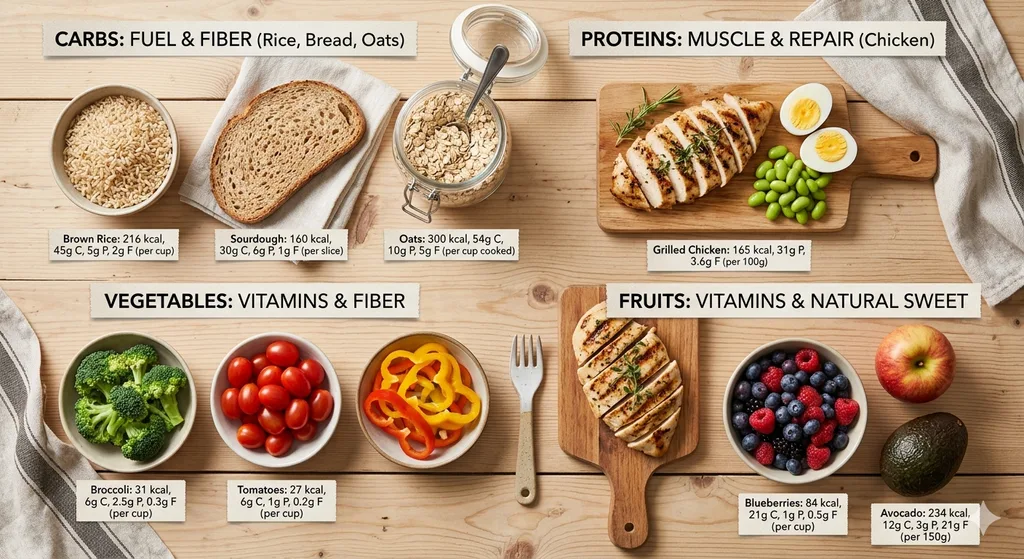
Originally, it was created to help people with diabetes manage blood sugar levels while still having variety in their meals. Instead of prescribing exact foods, foods were grouped into “exchange lists” based on similar calories and macronutrients.
For example:
- 1 chapati
- ½ cup cooked rice
- 1 slice of bread
…may all belong to a similar carbohydrate exchange group because they provide roughly comparable calories and carbs.
How Food Exchange Rules Work
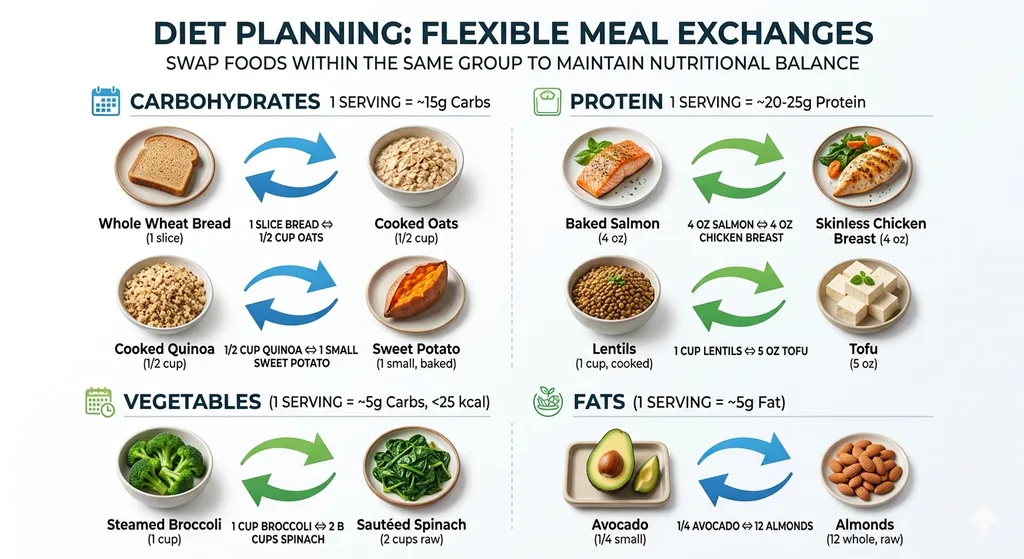
The core principle is simple: replace foods with nutritionally similar alternatives.
Nutritionists usually follow a few basic rules:
1. Similar Calories
The replacement food should have roughly the same caloric value.
2. Similar Macronutrients
Protein foods replace protein foods, carbs replace carbs, and fats replace fats.
3. Portion Sizes Matter
Exchanges only work when serving sizes are standardized.
4. Flexibility Over Perfection
The goal is consistency and adherence — not mathematical precision.
Why Nutritionists Use Exchange Systems
Food exchange systems make diet plans easier to follow in real life.
Instead of telling a client:
“You must eat this exact meal.”
A nutritionist can say:
“You can choose any option from this category.”
This flexibility improves long-term adherence and reduces diet fatigue.
As nutrition practices scale, managing these exchanges manually can become difficult — especially over spreadsheets and messaging apps. Platforms like InGreedX Studio are beginning to streamline this process by helping nutritionists manage meal plans, substitutions, and client workflows more efficiently.
If you’re scaling a practice, it’s also worth understanding why WhatsApp alone often starts failing for client management once the number of active clients increases.
Final Thoughts
Food exchange rules have existed for decades because they solve a real problem: diets need flexibility to work long term.
They help maintain nutritional balance while giving people freedom in their food choices — making healthy eating more sustainable and practical in everyday life.